Shein’s Evolution: Adapting to 2026 Consumer Demands
Anúncios
Shein is strategically evolving to meet 2026 consumer demands by enhancing sustainability, integrating advanced AI, and diversifying product lines, ensuring continued market relevance and growth.
Anúncios
The landscape of global fashion is in constant flux, and understanding Shein’s Evolution: How the Brand is Adapting to 2026 Consumer Demands – A 3-Month Analysis offers a critical look into the future of fast fashion. This analysis will explore the strategic shifts Shein is making to stay ahead in a rapidly changing market.
Understanding the 2026 Consumer Landscape
By 2026, consumer expectations will have significantly matured, driven by a blend of technological advancements, heightened environmental awareness, and a demand for personalized experiences. The days of purely transactional shopping are fading, replaced by a desire for brands that resonate with individual values and lifestyles. This shift presents both challenges and immense opportunities for giants like Shein.
Anúncios
Consumers are increasingly looking beyond just price and trend. They are scrutinizing a brand’s ethical footprint, its commitment to sustainability, and its ability to deliver unique, relevant products at speed. This comprehensive demand spectrum necessitates a multi-faceted approach to brand development and market engagement. Brands that fail to acknowledge these evolving priorities risk becoming obsolete in a competitive digital space.
The Rise of Conscious Consumption
The push for sustainable and ethical practices is no longer a niche concern; it’s a mainstream expectation. Consumers, particularly younger demographics, are willing to support brands that demonstrate transparency and responsibility.
- Environmental Impact: Shoppers prioritize brands reducing carbon footprints and waste.
- Ethical Sourcing: Fair labor practices and transparent supply chains are paramount.
- Durability and Longevity: A move away from purely disposable fashion towards items with extended wear.
The 2026 consumer is not just buying a product; they are investing in a brand’s story and values. Shein’s response to these demands will be pivotal in maintaining its market leadership and attracting a new generation of conscious shoppers.
Shein’s Strategic Pivot Towards Sustainability
Once primarily known for its ultra-fast fashion model, Shein is making notable strides to integrate sustainability into its core operations, a crucial response to 2026 consumer demands. This pivot is not merely cosmetic; it involves re-evaluating sourcing, production, and distribution processes to minimize environmental impact and enhance ethical practices. The brand recognizes that long-term success hinges on addressing the environmental concerns of its global customer base.
Over the past three months, Shein has been observed implementing several initiatives aimed at bolstering its sustainability credentials. These efforts range from material innovation to more responsible manufacturing techniques, signaling a genuine attempt to align with contemporary ethical guidelines. This strategic shift is designed to mitigate past criticisms and position Shein as a more responsible player in the fast-fashion industry.
Innovations in Sustainable Materials
Shein is actively exploring and integrating eco-friendly materials into its product lines. This includes working with suppliers to develop textiles that have a lower environmental footprint.
- Recycled Fabrics: Increasing the use of recycled polyester and cotton in garments.
- Organic Alternatives: Experimenting with organic cotton and other natural fibers.
- Waste Reduction: Implementing design and production strategies that minimize fabric waste.
These material innovations are critical steps in reducing the environmental burden of fast fashion. By focusing on sustainable inputs, Shein aims to offer consumers more environmentally conscious choices without compromising affordability or style. This commitment to sustainable materials is a direct answer to the evolving expectations of the 2026 consumer.
Furthermore, Shein is investing in technologies that support circular fashion models, such as garment recycling programs and initiatives that encourage product longevity. This holistic approach to sustainability demonstrates a deeper commitment than just surface-level changes. The initial three-month analysis shows a clear acceleration in these efforts, indicating a focused and determined strategy.
Leveraging AI and Data for Personalized Experiences
The digital native consumer of 2026 expects highly personalized shopping experiences, a demand Shein is uniquely positioned to meet through its sophisticated use of artificial intelligence and big data. Shein’s inherent data-driven model allows it to analyze trends, predict demand, and tailor offerings with remarkable precision. This technological edge is being further refined to create even more bespoke interactions, moving beyond simple recommendations to truly anticipatory fashion suggestions.
Over the last quarter, Shein has intensified its investment in AI algorithms that not only track purchasing patterns but also analyze social media trends, influencer preferences, and real-time feedback. This granular data analysis enables the brand to rapidly identify emerging styles and produce limited runs, effectively testing market receptivity before scaling production. This agile approach minimizes waste and maximizes relevance, a critical advantage in the fast-paced fashion world.
Predictive Analytics for Trend Forecasting
Shein’s AI systems are constantly processing vast amounts of data to identify micro-trends and predict future fashion directions. This allows for incredibly quick turnaround times from design to production.
- Real-time Trend Detection: Analyzing social media and search data for emerging styles.
- Demand Prediction: Forecasting popular items to optimize inventory and reduce overproduction.
- Personalized Curation: Offering highly relevant product suggestions to individual users.
This data-centric strategy allows Shein to stay hyper-responsive to consumer preferences, ensuring that its product catalog is always fresh and aligned with what shoppers want. The personalization extends beyond product recommendations to customized marketing campaigns and user interfaces, enhancing the overall shopping journey. These advancements are key to satisfying the discerning 2026 consumer who values both efficiency and relevance in their online interactions.
Enhancing Supply Chain Agility and Efficiency
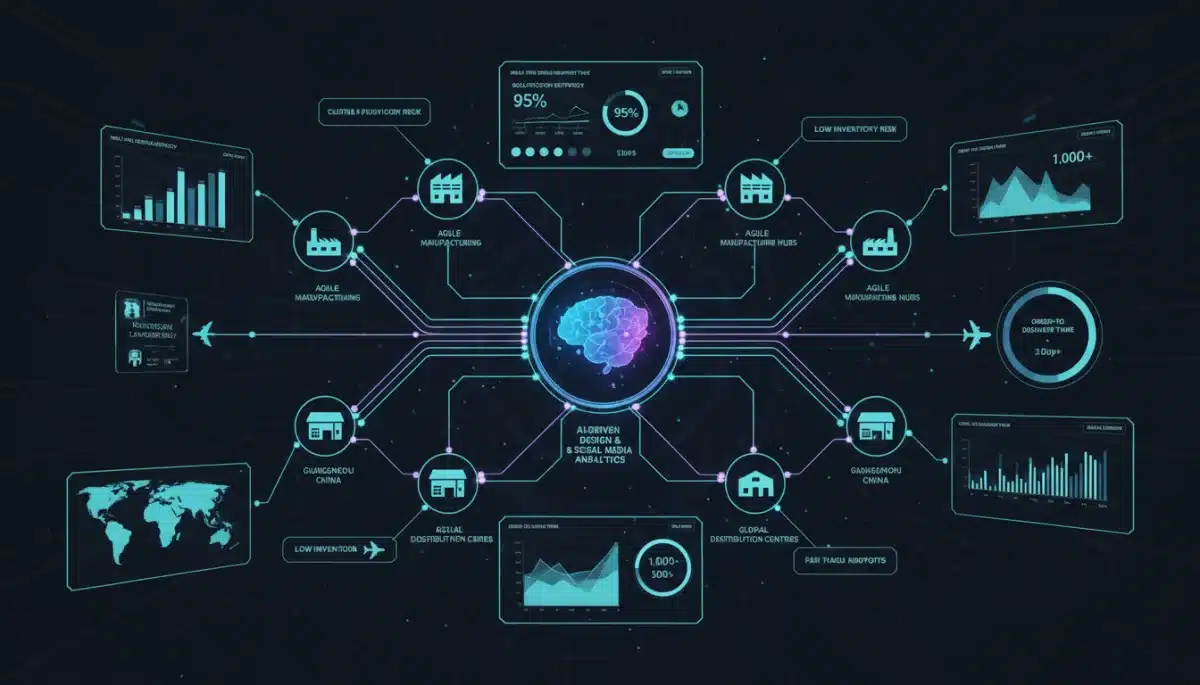
Shein’s operational backbone has always been its incredibly agile supply chain, a critical factor in its ability to deliver trending fashion at speed. As the brand adapts to 2026 consumer demands, this agility is being further optimized not just for speed, but also for transparency and responsiveness to evolving ethical standards. The goal is to maintain rapid production cycles while simultaneously improving accountability and reducing environmental impact.
The past three months have seen Shein investing in advanced logistics technologies and strengthening partnerships with suppliers who can meet stricter sustainability and labor standards. This involves a more rigorous vetting process for manufacturers and a greater emphasis on real-time tracking throughout the entire production and delivery pipeline. The enhanced efficiency aims to minimize lead times and provide greater visibility into the journey of each garment.
Micro-Batch Production Model
Shein’s unique micro-batch production system allows it to produce small quantities of new designs, test market demand, and then scale up only for successful items. This minimizes waste and ensures that production is aligned with actual consumer interest.
- Reduced Inventory Risk: Producing only what is likely to sell, preventing overstock.
- Rapid Trend Response: Quickly bringing new styles to market based on real-time data.
- Supplier Collaboration: Close integration with manufacturing partners for swift execution.
This iterative production model is a cornerstone of Shein’s adaptability. It allows the brand to experiment with a vast array of styles without committing to large-scale production until consumer interest is confirmed. This strategy is being refined to incorporate more sustainable manufacturing practices within these micro-batches, ensuring that even small runs adhere to the brand’s evolving ethical commitments. The focus on efficiency now extends to resource utilization and waste minimization.
Diversifying Product Lines and Market Reach
To cater to the multifaceted demands of the 2026 consumer, Shein is actively diversifying its product lines beyond traditional apparel, expanding into new categories and broadening its market reach. This strategic expansion is designed to capture a wider demographic and solidify its position as a comprehensive lifestyle brand. The brand understands that modern consumers seek convenience and variety from a single, trusted source.
Over the past three months, Shein has introduced new collections in home goods, beauty, and even pet supplies, signaling a clear intent to become a one-stop shop for a diverse array of consumer needs. This diversification is supported by the same agile supply chain and data analytics that drive its fashion offerings, ensuring that new categories are introduced efficiently and resonate with target audiences.
Expanding into Lifestyle Categories
Shein is strategically moving beyond just clothing to offer a broader range of products that cater to various aspects of consumer lives.
- Home & Living: Introducing decor, kitchenware, and organizational items.
- Beauty & Wellness: Expanding cosmetics, skincare, and personal care lines.
- Activewear & Sports: Aligning with the Dramaxo site’s focus, offering performance-oriented activewear.
This expansion into lifestyle categories not only increases Shein’s addressable market but also strengthens its brand loyalty by integrating into more aspects of daily life. The careful curation of these new offerings, informed by consumer data, ensures that each new category launch is met with enthusiasm. This strategic diversification is a testament to Shein’s ambition to evolve from a fast-fashion retailer into a formidable lifestyle e-commerce giant, meeting the holistic demands of the 2026 consumer.
Enhancing Customer Engagement and Community Building
In an increasingly digital world, genuine customer engagement and community building are paramount for brand longevity, a principle Shein is vigorously embracing as it adapts to 2026 consumer demands. Beyond transactional interactions, consumers seek connection, authenticity, and a sense of belonging. Shein is leveraging its vast user base to foster a vibrant online community, transforming shoppers into brand advocates.
Over the last three months, there has been a noticeable increase in Shein’s interactive campaigns, user-generated content initiatives, and direct engagement across various social media platforms. The brand is investing in features that allow customers to share styling tips, review products extensively, and participate in design challenges. This approach not only builds loyalty but also provides invaluable real-time feedback for product development and trend spotting.
Interactive Platforms and User Content
Shein is creating more dynamic spaces for customers to interact with the brand and with each other, fostering a sense of community.
- Live Shopping Events: Hosting interactive live streams featuring new collections and influencer collaborations.
- User Review System: Encouraging detailed reviews with photos and videos, influencing purchase decisions.
- Design Competitions: Inviting users to submit designs, some of which are produced and sold.
These engagement strategies are crucial for building a loyal customer base that feels heard and valued. By empowering its community, Shein gains a powerful feedback loop that informs future product development and marketing efforts. The focus on co-creation and user participation is a smart move to keep the brand relevant and resonant with the highly connected 2026 consumer, strengthening its position in the competitive e-commerce landscape.
| Key Adaptation | Brief Description |
|---|---|
| Sustainability Push | Integrating eco-friendly materials and ethical practices to meet conscious consumer demands. |
| AI Personalization | Leveraging AI and data for hyper-personalized shopping experiences and trend forecasting. |
| Supply Chain Efficiency | Optimizing micro-batch production for speed, transparency, and waste reduction. |
| Product Diversification | Expanding into lifestyle categories like home goods, beauty, and activewear to broaden market appeal. |
Frequently Asked Questions About Shein’s 2026 Evolution
Shein is integrating eco-friendly materials like recycled fabrics and organic cotton, alongside implementing waste reduction strategies in its production. They are also exploring circular fashion models and more transparent supply chain practices to meet the growing demand for ethical consumption among 2026 consumers.
AI is crucial for Shein’s predictive analytics, enabling real-time trend forecasting and demand prediction. This technology allows for hyper-personalized product recommendations and efficient micro-batch production, ensuring that Shein’s offerings are always relevant and tailored to individual consumer preferences by 2026.
Yes, Shein is significantly diversifying its product lines. The brand is expanding into lifestyle categories such as home goods, beauty and wellness products, and activewear. This strategy aims to cater to a broader spectrum of consumer needs and solidify Shein’s position as a comprehensive lifestyle e-commerce platform by 2026.
Shein is enhancing customer engagement through interactive platforms, live shopping events, and robust user-generated content initiatives. The brand encourages detailed reviews, styling tips, and participation in design challenges, fostering a strong sense of community and providing valuable feedback for future product development.
Shein continues to optimize its agile supply chain, focusing on its micro-batch production model for reduced waste and rapid trend response. The brand is also enhancing transparency and strengthening partnerships with suppliers to meet stricter ethical and sustainable manufacturing standards, ensuring efficient and responsible operations.
Conclusion
Shein’s journey towards 2026 is characterized by a dynamic and multifaceted evolution, demonstrating a clear commitment to adapting to the shifting tides of consumer demand. The brand’s strategic investments in sustainability, advanced AI, supply chain optimization, and product diversification underscore a proactive approach to maintaining relevance and leadership in the global fashion landscape. By prioritizing conscious consumption, personalized experiences, and robust community engagement, Shein is not merely reacting to market changes but actively shaping its future, promising a more responsible and responsive fashion ecosystem for its vast customer base.
